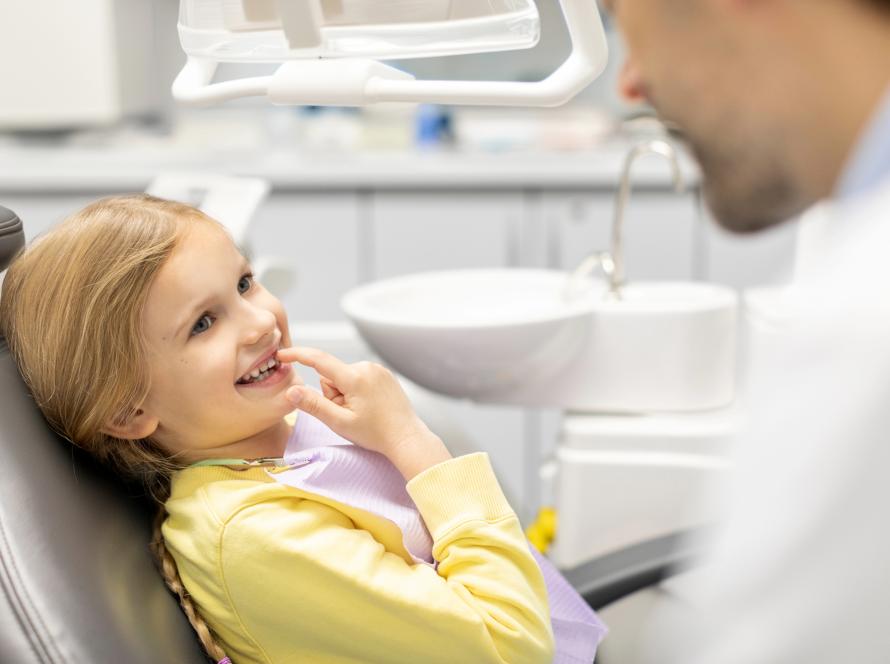
A child’s very first visit to a children’s dentist often shapes how they view oral care for years to come. Early impressions matter, especially when it comes to kids’ dental checkups and routine habits like kids’ dental cleaning. Many parents approach this milestone with a mix of preparation and uncertainty, trying to balance honesty with reassurance. The key is not just preparing the child, but also shaping the environment, expectations, and emotional tone around the experience. (Source: Today’s Parent, 6 tips to make your kid’s first dentist appointment NBD, By Kim Shiffman, Updated May 1, 2018, https://www.todaysparent.com/kids/kids-health/dentist-dread/).
Woodlawn Kids Dental shares, “A child’s introduction to kids’ oral health is less about the clinical moment and more about the emotional imprint it leaves behind. When families treat a kids’ dental checkup as a normal, even curious experience rather than a ‘big event,’ children tend to absorb that calm energy and carry it forward into future visits.”
- Check the place out
Familiarizing your child with the dental setting beforehand can ease anxiety. Visiting the space, meeting staff, or even walking by the office can make the environment feel less unfamiliar and intimidating.
Woodlawn Kids Dental explains, “Children process spaces through sensory cues, not logic. A pre-visit doesn’t need to be formal. Even noticing colors, sounds, or friendly faces can build a sense of recognition. When a child feels like they’ve ‘been here before,’ their brain categorizes the experience as safe rather than unknown, which changes their entire response during a kids’ dental checkup.”
- Spare the details
While it may seem helpful to explain everything in advance, too much detail can overwhelm a child or create unnecessary worry. Keeping explanations simple and neutral often works better.
Woodlawn Kids Dental highlights, “Children interpret language literally and imaginatively at the same time. Overexplaining can unintentionally plant ideas they hadn’t considered. Instead of focusing on procedures, it’s more effective to frame the visit as part of keeping their smile strong. This keeps the focus on outcome rather than process, which feels more manageable for young minds.”
- Keep your fears to yourself
Parents’ own dental anxieties can influence how a child perceives the experience. Even subtle cues like tone or body language can transfer unease.
Woodlawn Kids Dental mentions, “Children are highly attuned to emotional signals. Even a slight hesitation in a parent’s voice can be interpreted as a warning. One useful approach is to treat the visit as routine in both language and behavior. Kids’ oral health benefits when parents model neutrality or curiosity instead of reassurance rooted in fear.”
- Throw on some shades
Bright lights and unfamiliar equipment can be overwhelming. Simple tools like sunglasses can help children feel more comfortable during the visit.
Woodlawn Kids Dental expresses, “Small adjustments can significantly change a child’s sensory experience. Light sensitivity, unfamiliar sounds, and physical positioning all contribute to how a child feels during a kids’ dental cleaning. When these elements are softened or reframed, the child is better able to stay relaxed and engaged rather than defensive or overstimulated.”
- Let the older sibling go first
If there’s an older sibling, letting them go first can provide a helpful example. Younger children often learn by watching and imitating.
Woodlawn Kids Dental shares, “Peer modeling is powerful, especially within families. Watching a sibling navigate a kids’ dental checkup calmly can provide more reassurance than any explanation. It transforms the experience from something unknown into something familiar and achievable, which naturally builds confidence in younger children.”
- Give the reward first
Offering a reward before the appointment, rather than after, can shift the focus away from fear and toward positive association.
Woodlawn Kids Dental explains, “Traditional reward systems often frame the experience as something to ‘get through.’ Reversing that order changes the narrative. When a child receives something positive beforehand, the visit becomes part of an already good day rather than a hurdle. This subtle shift can reshape how children view kids’ dental cleaning and future visits.”
Helping a child feel comfortable at their first dental visit is less about eliminating fear entirely and more about guiding their perception of the experience. By focusing on familiarity, simplicity, and emotional tone, parents can create a foundation that supports lifelong kids’ oral health. Each small decision—from what you say to how you act—contributes to how your child interprets the visit.
Woodlawn Kids Dental concludes, “Positive dental experiences are built through moments that feel manageable and predictable to a child. When a kids’ dental checkup is approached with intention and awareness, it becomes less about the appointment itself and more about nurturing a healthy, confident relationship with oral care over time.”