Autism Spectrum Disorder (ASD) influences how children experience and interact with the world, including everyday routines such as brushing teeth and attending dental appointments. While every autistic child has unique strengths and challenges, sensory processing differences, communication preferences, and changes in routine can all influence their oral health experience. By understanding these factors, parents and caregivers can approach oral care more confidently and with greater flexibility.
Maintaining kids’ oral health is about much more than preventing cavities. It involves recognizing how sensory sensitivities, motor planning, dietary preferences, and emotional regulation may affect daily oral hygiene habits and kids’ dental checkup experiences. As awareness grows, so does the understanding that successful oral care often comes from adapting routines to the child rather than expecting every child to follow the same approach. (Source: Today’s Parent, Autism and Oral Health–What You Need to Know, By Jan Stewart, April 1, 2024, https://www.todaysparent.com/family/special-needs/autism-and-oral-health/).
Woodlawn Kids Dental shares, “One of the biggest shifts happening in discussions around autism and oral health is recognizing that cooperation is not the only measure of success. Sometimes success means helping a child become comfortable with simply exploring a toothbrush, tolerating toothpaste on their lips, or sitting in a dental chair for a few moments. These smaller milestones create lasting progress because they build familiarity instead of pressure.”
What Dental Issues Do Autistic Children Commonly Face?
Autistic children may experience many of the same dental concerns as other children, but certain factors can increase their risk for oral health challenges. Sensory sensitivities may make toothbrushing uncomfortable, while oral seeking behaviours can lead to chewing on clothing, toys, or other objects that may affect teeth over time. Some children also have highly selective eating habits, favouring softer foods or carbohydrate-rich snacks that may increase cavity risk if oral hygiene routines become difficult to maintain.
Additionally, some children may have difficulty communicating discomfort, meaning tooth pain or irritation may go unnoticed until it becomes more significant. Differences in muscle tone or oral motor function may also influence chewing patterns and saliva distribution, both of which play important roles in maintaining healthy teeth and gums.
Woodlawn Kids Dental comments, “An often-overlooked aspect of kids’ oral health is the relationship between sensory regulation and oral movement. Some children naturally seek oral stimulation throughout the day, while others avoid it altogether. Understanding these patterns helps explain why two children with similar brushing habits may have very different oral health experiences. Looking beyond brushing frequency and considering the child’s overall sensory profile provides a more complete picture.”
How Do Dentists Adapt to Autistic Children’s Needs?
Dental visits are increasingly becoming more individualized for autistic children. Rather than following a fixed sequence, appointments may be adjusted based on communication style, sensory preferences, attention span, and comfort level. Visual schedules, predictable routines, simplified language, gradual introductions to instruments, and sensory accommodations may all help reduce uncertainty during a kids’ dental checkup.
Equally important is recognizing that each visit may look different. A child who comfortably completes a full examination one day may need additional breaks during another visit due to unrelated stress, illness, fatigue, or changes in routine.
Woodlawn Kids Dental explains, “Predictability often matters more than speed. Many children benefit when every appointment follows the same sequence, even if that sequence is shorter than a traditional visit. Familiarity reduces the mental energy required to process new experiences, allowing more attention to be focused on the dental environment itself. Consistency can become one of the most valuable tools in creating positive associations over time.”
How Is Virtual Reality Being Used?
Virtual reality and similar technologies are being explored as one possible way to support children during healthcare experiences, including dental visits. While research continues, VR may help some children become more familiar with unfamiliar environments or provide an engaging distraction during certain parts of an appointment. It is only one of many tools being evaluated and may not be appropriate or beneficial for every child.
Technology should always be viewed as an optional support rather than a universal solution, as every child responds differently to visual and sensory input.
Woodlawn Kids Dental highlights, “Technology is most effective when it complements, rather than replaces, individualized preparation. Whether the support comes from virtual reality, visual stories, photographs, or simple demonstrations at home, the common goal is reducing uncertainty. Children often feel more confident when they have already experienced an environment in a familiar and predictable way before arriving.”
What Can Parents and Caregivers Do to Help?
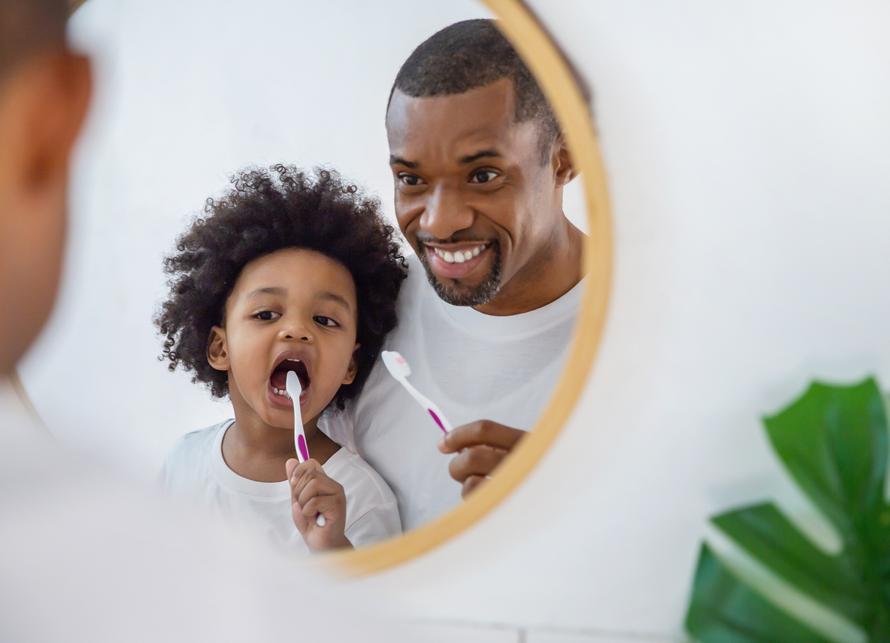
Parents and caregivers play an important role in building consistent oral care routines that work with their child’s individual needs. Flexibility is often more effective than rigid schedules. Some children may brush more successfully while standing, walking, or listening to music, while others benefit from visual timers, countdowns, or breaking brushing into smaller steps.
Introducing new toothbrushes, toothpaste flavours, or flossing techniques gradually can also reduce sensory overload. Celebrating progress rather than perfection encourages children to build positive associations with oral care instead of viewing it as a stressful obligation.
Routine kids’ dental cleaning appointments also provide opportunities to monitor oral development while reinforcing familiarity with dental environments over time.
Woodlawn Kids Dental mentions, “Families sometimes feel discouraged if traditional brushing routines are difficult. In reality, creating an oral care routine that matches the child’s sensory preferences is often far more sustainable than trying to follow a standard approach. Small adjustments—such as changing lighting, allowing movement during brushing, or introducing oral care through play—can transform the experience into something more manageable and consistent over the long term.”
Supporting autistic children in maintaining healthy smiles begins with understanding that every child experiences oral care differently. By recognizing sensory preferences, adapting routines, and focusing on gradual progress, parents and caregivers can help make daily brushing and kids’ dental checkup visits feel more predictable and less overwhelming.
Woodlawn Kids Dental concludes, “The future of kids’ oral health is becoming increasingly personalized. As understanding of neurodiversity continues to grow, the conversation is shifting away from expecting children to adapt to routines and toward designing routines that better support each child’s unique way of learning, communicating, and experiencing the world. That perspective creates opportunities for healthier habits that can continue well into adulthood.”